
CompTIA Cloud+ Certification Exam (CV0-001日本語版) : CV0-001日本語

Exam Code: CV0-001J
Exam Name: CompTIA Cloud+ Certification Exam (CV0-001日本語版)
Updated: Jul 19, 2026
Q & A: 565 Questions and Answers
CV0-001日本語 Free Demo download
About CompTIA CV0-001日本語 Exam
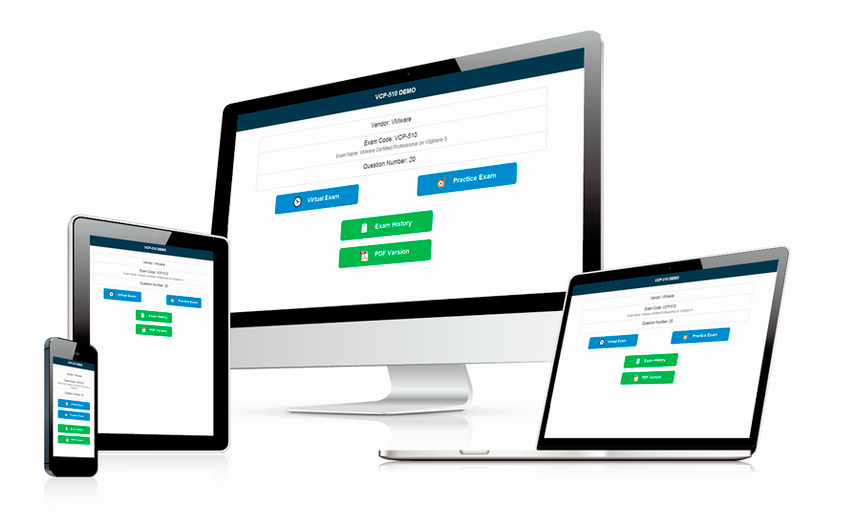
Interactive test engine
If the CompTIA Cloud+ Certification Exam (CV0-001日本語版) examkiller exam dumps have a large number of questions, I think it is a heavy burden for you to remember. Now, you may need some efficient study tool to help you. Here, I recommend our CompTIA Cloud+ Certification Exam (CV0-001日本語版) examkiller exam test engine which can create a real exam simulation environment to prepare for your upcoming test. The CompTIA Cloud+ Certification Exam (CV0-001日本語版) examkiller exam test engine is very customizable. With the options to highlight missed questions, you can analyze your mistakes and repeatedly practice until you really remember it. Besides, after each test, you can get a score about your CompTIA Cloud+ Certification Exam (CV0-001日本語版) examkiller exam simulate testing, thus you can be inspired by each time test and get progress each time. The randomness about the questions of the CompTIA Cloud+ Certification Exam (CV0-001日本語版) examkiller exam test engine gives a good way to master and remember the questions and key points. So with the full preparation for CompTIA Cloud+ Certification Exam (CV0-001日本語版) actual test, you will easily face the CV0-001日本語 actual test and get a high score finally.
Frequent update & accurate
The industry and technology is constantly changing, and we should keep our knowledge latest to catch up with the general trends. While, how to master the professional skill about CompTIA Cloud+ Certification Exam (CV0-001日本語版) exam certification is a question to all the IT candidates. Acquiring the latest knowledge about CompTIA Cloud+ Certification Exam (CV0-001日本語版) certification means you have more possibility for success. Here, we provide you with the regular updates of CompTIA Cloud+ Certification Exam (CV0-001日本語版) examkiller braindumps with accurate answers, and keep you one step ahead in the real exam. Our CV0-001日本語 examkiller questions & answers are compiled by our professional experts who all have decades of rich hands-on experience, so the quality of our CompTIA Cloud+ Certification Exam (CV0-001日本語版) examkiller actual exam test is authoritative and valid. Besides, we have arranged people to check and confirm whether the CompTIA Cloud+ Certification Exam (CV0-001日本語版) examkiller exam dump is updated or not every day. So we will update it as soon as the real exam changed.
What's more, if you purchase our CompTIA CompTIA Cloud+ Certification Exam (CV0-001日本語版) examkiller exam cram, you will have one year time to get the free update. You will receive the latest CompTIA Cloud Essentials examkiller practice dumps immediately once it is updated. I think with the CompTIA Cloud+ Certification Exam (CV0-001日本語版) examkiller latest exam dumps, you can pass your CV0-001日本語 actual test successfully.
Getting certified is really a good way to advance your career in the IT industry. So which IT certification do you want to get? Maybe CompTIA Cloud Essentials CompTIA Cloud+ Certification Exam (CV0-001日本語版) exam certification is right certification you are looking for. Maybe you are still confused about how to prepare for it. Thus you can consider finding an accountable and reliable IT exam training provider for CompTIA Cloud+ Certification Exam (CV0-001日本語版) actual exam test. Here, CV0-001日本語 examkiller practice dumps may be a good study reference for you. Our CompTIA Cloud+ Certification Exam (CV0-001日本語版) test training reviews can ensure you pass the exam at first attempt.

CompTIA Cloud+ Exam Certification Details:
| Exam Price | $294 (USD) |
| Exam Code | CV0-001 |
| Passing Score | 750 / 900 |
| Books / Training | CompTIA Cloud+ CV0-001 |
| Number of Questions | 100 |
| Exam Name | CompTIA Cloud+ |
| Schedule Exam | CompTIA Marketplace |
| Duration | 90 mins |
| Sample Questions | CompTIA Cloud+ Sample Questions |
Full refund in case of failure
Although our CompTIA Cloud+ Certification Exam (CV0-001日本語版) examkiller exam dumps have high passing rate, there are still some factor resulting in actual test failure. Maybe you do not prepare well, maybe you make some mistakes, which lead to your failure. Do not worry, we promise to give you full refund if you fail the CompTIA Cloud Essentials CompTIA Cloud+ Certification Exam (CV0-001日本語版) actual test. You just show us your failure certification, after we confirm, we will full refund you at last.
Instant Download: Upon successful payment, Our systems will automatically send the product you have purchased to your mailbox by email. (If not received within 12 hours, please contact us. Note: don't forget to check your spam.)
CompTIA CV0-001 Exam Syllabus Topics:
| Topic | Details |
|---|---|
| Cloud Concepts and Models 12% | |
| Compare and contrast cloud services. | 1. SaaS (according to NIST)2.IaaS (according to NIST) 3.PaaS (according to NIST) 4.CaaS 5.XaaS 6. DaaS 7.BPaaS 8. Accountability and responsibility based on service models |
| Compare and contrast cloud delivery models and services. | 1. Private2. Public 3. Hybrid 4. Community 5. On-premise vs. off-premise hosting 6. Accountability and responsibility based on delivery models 7.Security differences between models
9. Orchestration platforms |
| Summarize cloud characteristics and terms. | 1. Elasticity2. On-demand self-service/just-in-time service 3. Pay-as-you-grow 4. Chargeback 5. Ubiquitous access 6. Metering resource pooling 7. Multi-tenancy 8. Cloud bursting 9. Rapid deployment 10. Automation |
| Explain object storage concepts. | 1. Object ID2. Metadata 3. Data/blob 4. Extended metadata 5. Policies 6. Replicas 7. Access control |
| Virtualization 19% | |
| Explain the differences between hypervisor types. | 1.Type I and Type II
3.Consumer vs. enterprise use
|
| Install, configure and manage virtual machines and devices. | 1. Creating, importing and exporting template and virtual machines 2.Install guest tools
4.Image backups vs. file backups 5.Virtual NIC
|
| Given a scenario, perform virtual resource migration. | 1. Establish requirements2. Maintenance scheduling 3. Reasons
6. Physical to Virtual (P2V) 7. Virtual to Virtual (V2V) 8. Virtual to Physical (V2P) |
| Explain the benefits of virtualization in a cloud environment. | 1. Shared resources2. Elasticity
4. Infrastructure consolidation 5. Virtual datacenter creation |
| Compare and contrast virtual components used to construct a cloud environment. | 1.Virtual network components
3. Virtual CPU 4.Storage virtualization
|
| Infrastructure 21% | |
| Compare and contrast various storage technologies. | 1.Network Attached Storage (NAS)
|
| Explain storage configuration concepts. | 1.Disk types
|
| Execute storage provisioning. | 1. Creating LUNs2. Creating network shares 3. Zoning and LUN masking 4.Multipathing 5. Implications of adding capacity to a NAS and SAN
|
| Given a scenario, implement appropriate network configurations. | 1.NAT 2. PAT3.Subnetting/supernetting 4.VLAN and VLAN tagging 5. Network port configurations 6. Switching and routing in physical and virtual environments
|
| Explain the importance of network optimization. | 1. WAN2. LAN 3. MAN 4. QoS 5. Bandwidth 6. Latency 7. Compression 8. Caching 9. Load balancing 10. Devices on the same subnet |
| Given a scenario, troubleshoot basic network connectivity issues. | 1.Tools
3. Review system logs |
| Explain common network protocols, ports and topologies. | 1. Trunk ports2. Port binding/aggregation 3. Common ports
|
| Explain common hardware resources and features used to enable virtual environments. | 1. BIOS/firmware configurations2. Minimum memory capacity and configuration 3. Number of CPUs 4. Number of cores 5.NICs quantity, speeds and configurations 6. Internal hardware compatibility 7. HBAs 8. Storage media
|
| Resource Management 13% | |
| Given a scenario, implement and use proper resource monitoring techniques. | 1.Protocols
4. Automated responses to specific events 5. Examine processes usage/resource usage |
| Given a scenario, appropriately allocate physical (host) resources using best practices. | 1. Memory2. CPU 3. Storage and network allocation 4. Entitlement/quotas (shares)
6. Licensing 7. Resource pooling |
| Given a scenario, appropriately allocate virtual (guest) resources using best practices. | 1. Virtual CPU2. Memory 3. Storage and network allocation 4. Entitlement/quotas (shares) 5. Hard limit/soft limit 6. Reservations/licensing 7. Dynamic resource allocation 8. Resource pooling 9. CPU affinity 10. Physical resource redirection and mapping to virtual resources
|
| Given a scenario, use appropriate tools for remote access. | 1. Remote hypervisor access2. RDP 3. SSH 4.Console port 5.HTTP |
| Security 16% | |
| Explain network security concepts, tools and best practices. | 1. ACLs2.VPNs 3. IDS/IPS hardware/ software-based firewalls 4. DMZ 5. Review/audit logs 6.Attacks
|
| Explain storage security concepts, methods and best practices. | 1. Obfuscation2. Access control lists 3. Zoning 4. LUN masking 5. User and host authentication 6. Review/audit logs |
| Compare and contrast different encryption technologies and methods. | 1. PKI2.IPSec 3. SSL/TLS 4.Ciphers
|
| Identify access control methods. | 1. Role-based administration2. Mandatory access controls 3. Discretionary access controls 4. Multifactor authentication 5. Single sign-on 6. Federation |
| Implement guest and host hardening techniques. | 1. Disabling unneeded ports and services2. User credentials
4. Antivirus software 5. Patching 6.Deactivating default accounts |
| Systems Management 11% | |
| Explain policies and procedures as they relate to a cloud environment. | 1. Network and IP planning/documentation2. Configuration standardization and documentation 3. Change management best practices
7. Maintenance windows
|
| Given a scenario, diagnose, remediate and optimize physical host performance. | 1.Disk performance 2. Disk tuning3. Disk latency 4. Swap disk space 5. I/O tuning 6. Performance management and monitoring tools 7. Establish baseline and create documentation with appropriate tools 8.Hypervisor configuration best practices
10.Common issues
|
| Explain common performance concepts as they relate to the host and the guest. | 1. IOPS2. Read vs. write files 3. File system performance 4. Metadata performance 5. Caching 6. Bandwidth 7. Throughput (bonding/teaming) 8. Jumbo frames 9. Network latency 10. Hop counts 11. QoS 12.Multipathing 13. Load balancing 14. Scaling
|
| Implement appropriate testing techniques when deploying cloud services. | 1. Test replication2. Test latency 3. Test bandwidth 4. Test load balancing 5. Test application servers 6. Test storage 7. Test application delivery 8. Service performance testing and application performance testing 9. Penetration testing 10. Vulnerability assessment 11. Separation of duties during testing |
| Business Continuity in the Cloud 8% | |
| Compare and contrast disaster recovery methods and concepts. | 1.Redundancy 2.Failover 3.Geographical diversity 4.Failback 5.Replication 6.Site mirroring 7.Hot site 8.Cold site 9.Warm site 10.Backup and recovery 11. Archiving and off-site storage 12.Replication types
14. RPO 15.MTBF 16.MTTR 17. Mission-critical requirements |
| Deploy solutions to meet availability requirements. | 1.Fault tolerance
3. Load balancing |
Reference: https://certification.comptia.org/certifications/cloud


What Clients Say About Us
Why Choose ITexamReview
Quality and Value
ITexamReview Practice Exams are written to the highest standards of technical accuracy, using only certified subject matter experts and published authors for development - no all study materials.
Tested and Approved
We are committed to the process of vendor and third party approvals. We believe professionals and executives alike deserve the confidence of quality coverage these authorizations provide.
Easy to Pass
If you prepare for the exams using our ITexamReview testing engine, It is easy to succeed for all certifications in the first attempt. You don't have to deal with all dumps or any free torrent / rapidshare all stuff.
Try Before Buy
ITexamReview offers free demo of each product. You can check out the interface, question quality and usability of our practice exams before you decide to buy.
Our Clients


Our examkiller dumps is the best provider of IT exam training, which is really worth being chosen for your exam preparation. The test actual reviews from our customer are positive. We ensure you 100% pass. In case of any failure, we will full refund you.
Latest Examkiller pdf
- DP-600-KR examkiller pdfMay 28, 2022
- Associate-Cloud-Engineer examkiller pdfMay 28, 2022
- SY0-701 examkiller pdfMay 28, 2022
- AD0-E129 examkiller pdfMay 28, 2022
Contact Us
From Monday to Saturday
Support: Contact now
If you have any question please leave me your email address, we will reply and send email to you in 12 hours.
Copyright © 2026 ITexamReview NETWORK CO.,LIMITED. All Rights Reserved. All trademarks used are properties of their respective owners. Privacy Policy