
Microsoft Implementing Data Models and Reports with Microsoft SQL Server (70-466日本語版) : 70-466日本語

Exam Code: 70-466J
Exam Name: Implementing Data Models and Reports with Microsoft SQL Server (70-466日本語版)
Updated: Jul 03, 2026
Q & A: 186 Questions and Answers
70-466日本語 Free Demo download
About Microsoft 70-466日本語 Exam
Topics of Microsoft 70-466: Implementing Data Models and Reports with Microsoft SQL Server Exam
Candidates must know the exam topics before they start of preparation. because it will really help them in hitting the core. Our Microsoft 70-466: Implementing Data Models and Reports with Microsoft SQL Server Exam exam dumps will include the following topics:
1. Build an analysis services multidimensional database (35-40%)
Design dimensions and measures
- Given a requirement, identify the dimension/measure group relationship that should be selected; design patterns for representing business facts and dimensions (many-to-many relationships); design dimensions to support multiple related measure groups (many related fact tables); handle degenerate dimensions in a cube; identify the attributes for dimensions; identify the measures; aggregation behavior for the measures; build hierarchies; define granularity of dimension relationships
Implement and configure dimensions in a cube
- Translations, define attribute relationships, implement hierarchies, implement SQL Server Analysis Services (SSAS) dimensions and cubes, create the Attribute Relationships that should be made for a given set of attributes in a dimension, develop new custom attributes on dimensions, detect possible design flaws in attribute relationships, implement time dimensions in cubes, manage SSAS parent-child dimensions, dimension type
Design a schema to support cube architecture
- Multidimensional modeling starting from a star schema, relational modeling for a data source view, choose or create a topology, identify the appropriate data types with correct precision and size
Create and configure measures
- Logically group measures and configure Measure Group Properties, select appropriate aggregation functions, format measures, design the measure group for the correct granularity
Implement a cube
- Use SQL Server Data Tools - Business Intelligence (SSDT-BI) to build the cube; use SSDT-BI to do non-additive or semi-additive measures in a cube, define measures, specify perspectives, define translations, define dimension usage, define cube-specific dimension properties, define measure groups, implement reference dimensions, implement many-to-many relationships, implement fact relationships, implement role-playing relationships, create and manage linked measure groups and linked dimensions, create actions
Create Multidimensional Expressions (MDX) and Data Analysis Expressions (DAX) queries
- Identify the structures of MDX and the common functions (tuples, sets, TopCount, SCOPE, and more); identify which MDX statement would return the required result; implement a custom MDX or logical solution for a pre-prepared case task; identify the structure of DAX and common functions, including CALCULATE, EVALUATE, and FILTER; identify which DAX query would return the required result
Implement custom logic in a data model
- Define key performance indicators (KPIs); define calculated members; create relative measures (growth, YoY, same period last year), percentage of total using MDX; named sets; add Time Intelligence; implement ranking and percentile; define MDX script to import partial PowerPivot model
Implement storage design in a multidimensional model
- Create aggregations, create partitions, storage modes, define proactive caching, manage write-back partitions, implement linked cubes, implement distributed cubes
Select an appropriate model for data analysis
- Select Tabular versus Multidimensional based on scalability needs, traditional hierarchical, data volume; select appropriate organizational BI, such as corporate BI, and team and personal BI needs and data status
2. Manage, maintain, and troubleshoot a SQL Server Analysis Services (SSAS) database (15-20%)
Analyze data model performance
- Identify performance consequences of data source view design, optimize performance by changing the design of the cube or dimension, analyze and optimize performances of an MDX/DAX query, optimize queries for huge data sets, optimize MDX in the calculations, performance monitor counters, select appropriate Dynamic Management Views for Analysis Services, analyze and define performance counters, monitor growth of the cache, define and view logging options
Process data models
- Define processing of tables or partitions for tabular and multidimensional models; define processing of databases, cubes, and dimensions for multidimensional models; select full processing versus incremental processing; define remote processing; define lazy aggregations; automate with Analysis Management Objects (AMO) or XML for Analysis (XMLA); process and manage partitions by using PowerShell
Troubleshoot data analysis issues
- Use SQL Profiler; troubleshoot duplicate key dimension processing errors; error logs and event viewer logs of SSAS, mismatch of data: incorrect relationships or aggregations; dynamic security issues; validate logic and calculations
Deploy SSAS databases
- Deployment Wizard, implement SSDT-BI, deploy SSMS; test solution post deployment, decide whether or not to process, test different roles
Install and maintain an SSAS instance
- Install SSAS; install development tools; identify development and production installation considerations; upgrade SSAS instance; define data file and program file location; plan for Administrator accounts; define server and database level security; support scale-out read-only; update SSAS (service packs); install and maintain each instance type of Analysis Services, including PowerPivot; restore and import PowerPivot; back up and restore by using PowerShell
3. Build a tabular data model (15-20%)
Configure permissions and roles in a tabular model
- Configure server roles, configure SSAS database roles, implement dynamic security (custom security approaches), role-based access, test security permissions, implement cell-level permissions
Implement a tabular data model
- Define tables, import data, define calculated columns, define relationships, define hierarchies and perspectives, manage visibility of columns and tables, embed links, optimize BISM for Power View, mark a date table, sort a column by another column
Implement business logic in a tabular data model
- Implement measures and KPIs, implement Data Analysis Expressions (DAX), define relationship navigation, implement time intelligence, implement context modification
Implement data access for a tabular data model
- Manage partitions, processing, select xVelocity versus DirectQuery for data access
4. Build a report with SQL Server Reporting Services (SSRS) (25-30%)
Design a report
- Select report components (crosstab report, Tablix, design chart, data visualization components), design report templates (Report Definition Language), identify the data source and parameters; design a grouping structure; drill-down reports, drill-through reports; determine if any expressions are required to display data that is not coming directly from the data source
Implement a report layout
- Formatting; apply conditional formatting; page configuration; implement headers and footers; implement matrixes, table, chart, images, list, indicators, maps, and groupings in reports; use Report Builder to implement a report layout; create a range of reports using different data regions; define custom fields (implementing different parts of the report); implement collections (global collections); define expressions; implement data visualization components; identify report parts; implement group variables and report variables; design for multiple delivery extension formats
Configure authentication and authorization for a reporting solution
- Configure server-level and item-level role-based security, configure reporting service security (setup or addition of role), authenticate against data source, store credential information, describe Report Server security architecture and site level security, create system level roles, item level security, create a new role assignment, assign Windows users to roles, secure reports using roles, configure SharePoint groups and permissions, define varying content for different role memberships
Implement interactivity in a report
- Drilldown; drillthrough; interactive sorting; parameters: (databound parameters, multi-value parameters); create dynamic reports in SSRS using parameters; implement show/hide property; actions (jump to report); filters; parameter list; fixed headers; document map, embedded HTML
Troubleshoot reporting services issues
- Query the ReportServer database; view Reporting Services log files; use Windows Reliability and Performance monitor data for troubleshooting; use the ReportServer: define service and web service objects; monitor for long-running reports, rendering, and connectivity issues; use SQL Profiler; perform data reconciliation for incorrect relationships or aggregations; detect dynamic security issues; validate logic and calculations
Manage a report environment
- Manage subscriptions and subscription settings; define data-driven subscriptions; manage data sources; integrate SharePoint Server; define email delivery settings; manage the number of snapshots; manage schedules, running jobs, and report server logs; manage report server databases; manage the encryption keys; set up the execution log reporting; review the reports; configure site-level settings; design report lifecycle; automate management of reporting services; create a report organization structure; install and configure reporting services; deploy custom assemblies
Configure report data sources and datasets
- Select appropriate query types (stored procedure versus table versus text only); configure parameterized connection strings (dynamic connection strings); define filter location (dataset versus query); configure data source options, for example, extract and connect to multiple data sources; shared and embedded data sources and datasets; use custom expressions in data sources; connect to Microsoft Azure SQL database; implement DAX and MDX queries to retrieve appropriate data sets; work with non-relational data sources, such as XML or Sharepoint lists
Reference: https://www.microsoft.com/en-us/learning/exam-70-466.aspx
Frequent update & accurate
The industry and technology is constantly changing, and we should keep our knowledge latest to catch up with the general trends. While, how to master the professional skill about Implementing Data Models and Reports with Microsoft SQL Server (70-466日本語版) exam certification is a question to all the IT candidates. Acquiring the latest knowledge about Implementing Data Models and Reports with Microsoft SQL Server (70-466日本語版) certification means you have more possibility for success. Here, we provide you with the regular updates of Implementing Data Models and Reports with Microsoft SQL Server (70-466日本語版) examkiller braindumps with accurate answers, and keep you one step ahead in the real exam. Our 70-466日本語 examkiller questions & answers are compiled by our professional experts who all have decades of rich hands-on experience, so the quality of our Implementing Data Models and Reports with Microsoft SQL Server (70-466日本語版) examkiller actual exam test is authoritative and valid. Besides, we have arranged people to check and confirm whether the Implementing Data Models and Reports with Microsoft SQL Server (70-466日本語版) examkiller exam dump is updated or not every day. So we will update it as soon as the real exam changed.
What's more, if you purchase our Microsoft Implementing Data Models and Reports with Microsoft SQL Server (70-466日本語版) examkiller exam cram, you will have one year time to get the free update. You will receive the latest Microsoft SQL Server 2012 examkiller practice dumps immediately once it is updated. I think with the Implementing Data Models and Reports with Microsoft SQL Server (70-466日本語版) examkiller latest exam dumps, you can pass your 70-466日本語 actual test successfully.
Getting certified is really a good way to advance your career in the IT industry. So which IT certification do you want to get? Maybe Microsoft SQL Server 2012 Implementing Data Models and Reports with Microsoft SQL Server (70-466日本語版) exam certification is right certification you are looking for. Maybe you are still confused about how to prepare for it. Thus you can consider finding an accountable and reliable IT exam training provider for Implementing Data Models and Reports with Microsoft SQL Server (70-466日本語版) actual exam test. Here, 70-466日本語 examkiller practice dumps may be a good study reference for you. Our Implementing Data Models and Reports with Microsoft SQL Server (70-466日本語版) test training reviews can ensure you pass the exam at first attempt.

Full refund in case of failure
Although our Implementing Data Models and Reports with Microsoft SQL Server (70-466日本語版) examkiller exam dumps have high passing rate, there are still some factor resulting in actual test failure. Maybe you do not prepare well, maybe you make some mistakes, which lead to your failure. Do not worry, we promise to give you full refund if you fail the Microsoft SQL Server 2012 Implementing Data Models and Reports with Microsoft SQL Server (70-466日本語版) actual test. You just show us your failure certification, after we confirm, we will full refund you at last.
Instant Download: Upon successful payment, Our systems will automatically send the product you have purchased to your mailbox by email. (If not received within 12 hours, please contact us. Note: don't forget to check your spam.)
Interactive test engine
If the Implementing Data Models and Reports with Microsoft SQL Server (70-466日本語版) examkiller exam dumps have a large number of questions, I think it is a heavy burden for you to remember. Now, you may need some efficient study tool to help you. Here, I recommend our Implementing Data Models and Reports with Microsoft SQL Server (70-466日本語版) examkiller exam test engine which can create a real exam simulation environment to prepare for your upcoming test. The Implementing Data Models and Reports with Microsoft SQL Server (70-466日本語版) examkiller exam test engine is very customizable. With the options to highlight missed questions, you can analyze your mistakes and repeatedly practice until you really remember it. Besides, after each test, you can get a score about your Implementing Data Models and Reports with Microsoft SQL Server (70-466日本語版) examkiller exam simulate testing, thus you can be inspired by each time test and get progress each time. The randomness about the questions of the Implementing Data Models and Reports with Microsoft SQL Server (70-466日本語版) examkiller exam test engine gives a good way to master and remember the questions and key points. So with the full preparation for Implementing Data Models and Reports with Microsoft SQL Server (70-466日本語版) actual test, you will easily face the 70-466日本語 actual test and get a high score finally.
Exam 70-466: Implementing Data Models and Reports with Microsoft SQL Server
This exam is intended for business intelligence (BI) developers who focus on creating BI solutions that require implementing multi-dimensional data models, implementing and maintaining OLAP cubes, and creating information displays used in business decision making.
Part of the requirements for: MCSE: Data Management and Analytics


- Querying Microsoft SQL Server 2012/2014 (070-461日本語版)
- Transition Your MCITP: Database Administrator 2008 or MCITP: Database Developer 2008 to MCSE: Data Platform
- Developing Microsoft SQL Server Databases (70-464日本語版)
- Designing Database Solutions for Microsoft SQL Server (070-465日本語版)
- Administering Microsoft SQL Server 2012/2014 Databases (070-462日本語版)
What Clients Say About Us
Why Choose ITexamReview
Quality and Value
ITexamReview Practice Exams are written to the highest standards of technical accuracy, using only certified subject matter experts and published authors for development - no all study materials.
Tested and Approved
We are committed to the process of vendor and third party approvals. We believe professionals and executives alike deserve the confidence of quality coverage these authorizations provide.
Easy to Pass
If you prepare for the exams using our ITexamReview testing engine, It is easy to succeed for all certifications in the first attempt. You don't have to deal with all dumps or any free torrent / rapidshare all stuff.
Try Before Buy
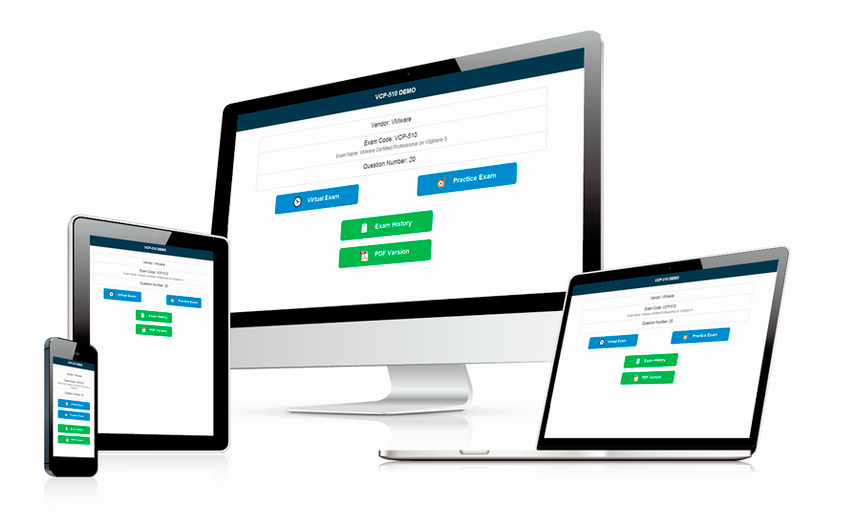
ITexamReview offers free demo of each product. You can check out the interface, question quality and usability of our practice exams before you decide to buy.
Our Clients


Our examkiller dumps is the best provider of IT exam training, which is really worth being chosen for your exam preparation. The test actual reviews from our customer are positive. We ensure you 100% pass. In case of any failure, we will full refund you.
Latest Examkiller pdf
- C_SAC examkiller pdfMay 28, 2022
- MS-700-KR examkiller pdfMay 28, 2022
- NS0-194 examkiller pdfMay 28, 2022
- COF-C03 examkiller pdfMay 28, 2022
Contact Us
From Monday to Saturday
Support: Contact now
If you have any question please leave me your email address, we will reply and send email to you in 12 hours.
Copyright © 2026 ITexamReview NETWORK CO.,LIMITED. All Rights Reserved. All trademarks used are properties of their respective owners. Privacy Policy