
Microsoft AZ-400 Korean : Designing and Implementing Microsoft DevOps Solutions (AZ-400 Korean Version)

Exam Code: AZ-400-KR
Exam Name: Designing and Implementing Microsoft DevOps Solutions (AZ-400 Korean Version)
Updated: Jul 31, 2026
Q & A: 625 Questions and Answers
AZ-400 Korean Free Demo download
About Microsoft AZ-400 Korean Exam
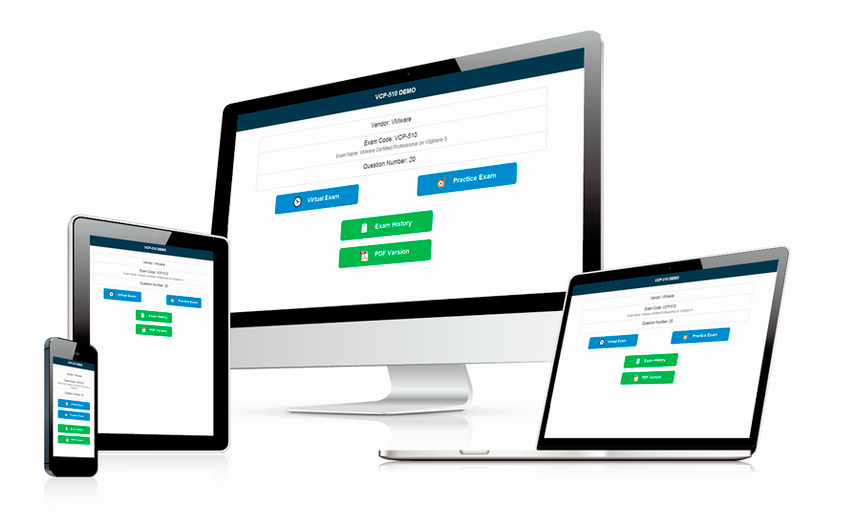
Take less time to prepare by AZ-400 Korean soft test engine
You may complain about the too long time to review the AZ-400 Korean examkiller training test. Sure, you just need take several hours to attend the test, and the result will be out in those days. All the things seem so soon. While, actually you have done much effort to the preparation for the AZ-400 Korean actual test. Our AZ-400 Korean examkiller exam pdf will bring you a high efficiency study. AZ-400 Korean soft test engine can simulate the real test, thus you can take a simulation test in advance. Besides, you can install the Microsoft AZ-400 Korean soft test engine on your phone or i-pad, thus your spare time can be full made use of. You can enhance your knowledge when you are on the subway or waiting for a bus. I believe you will pass the AZ-400 Korean actual exam by specific study plan with the help of our AZ-400 Korean exam review torrents.
Books for preparation
To pass the exam, the candidate must be proficient in Azure development and administration. Therefore, our suggested reading list assumes that the candidate already has the required background in this area.
- ‘AZ-400: Microsoft Azure Dev0ps Solutions: 300+ Exam Practice Questions with Detail Explanation and Reference Links’ by Analytiq Tech
The authors of Analytiq Tech state that their product is the best way to prepare for the Microsoft Azure certification exam. The book covers the exam blueprint and offers you to study and train more than 300 scenario-based questions with thorough explanations. An ongoing support, feedback, and cell phone access - all make this resource the ultimate preparation resource for the AZ-400 exam. The learning environment is fully adapted to the real pass conditions. The time allowed to take the test is the same as for the real exam. You will always work with the actual material because the test questions are updated according to the primary source. This guide can be found on the Amazon website in Kindle and Paperback copy.
- ‘Implementing Azure DevOps Solutions: Learn about Azure DevOps Services to successfully apply DevOps strategies’ by Henry Been and Mike van der Gaag
According to Amazon users, this is a complete guide that will help you become a successful Azure DevOps engineer. The authors are real experts in the subject matter and they explain how to use the Microsoft Azure cloud platform - including both the basics and more advanced techniques through analysis of case studies. You will learn how to create your own Azure DevOps organization and implement the most DevOps practices. This will help you to better understand the exam objectives and review the most important concepts. Using books and study guides for your preparation is a great option to follow, as it’s an effective way to summarize the knowledge for AZ-400 exam, and learn the details that you won’t find anywhere else. For everyone, this give is available on Amazon in Kindle and Paperback formats.
Dear, do you want to change your current life? Gain the AZ-400 Korean exam certification to equip yourself with more competitive advantage. Qualified by the AZ-400 Korean certification demonstrates that you have honed your skills through rigorous study and hands-on experience. In the job hunting, the qualified people have more possibility to get a better position. So, in order to get more chance for options, it is necessary to get the AZ-400 Korean exam certification. While the knowledge you study may be not enough to pass the actual test, thus you need some useful study material, such as the AZ-400 Korean examkiller study guide from our site.

Major Exam Topics
To get the required score and obtain the expert-level certification, you need to master the certain topics, each having the particular percentage of the whole content. The domains include the following:
- Manage Source Control (10-15%);
- Facilitate Communication and Collaboration (10-15%);
- Design a Security and Compliance Plan (10-15%);
- Implement a Release Management and Continuous Delivery Strategy (10-15%);
- Develop a Site Reliability Engineering Strategy (5-10%);
- Develop an Instrumentation Strategy (5-10%);
- Implement Continuous Integration (20-25%).
It is important to know all the subtopics and vital details related to these areas so that you will be able to master them. Therefore, let’s look at this information.
Domain 1: This objective includes three main subtopics that are covering the least amount of the whole exam content. Thus, you should know how to design an actionable alerting strategy, a failure prediction strategy, and implement a health check. This means that it is important to know how to identify metrics and recommend them on which to base alerts, analyze combinations of metrics, as well as design the mechanisms of communication to notify the users of degraded systems. A potential candidate has to understand the behavior of a system, know how to analyze it, measure baseline metrics, and know which tools to use to prevent the system from failure. Analyzing system dependencies is also an important task to deal with.
Domain 2: This area proves that you are capable of designing authentication and authorization strategies, sensitive information management strategies, security and compliance, as well as governance enforcement mechanisms. These four subjects include the skills in organizing teams with the use of Azure AD groups, evaluating vault solutions, as well as assessing and reporting risks. Your knowledge also requires the ability to implement container scanning and Azure policies.
Domain 3: This topic covers the generation of DevOps process documentation, automation of communication with team members, and your ability to communicate with the business stakeholders about the deployment and release information. This means that you have to know how to integrate GitHub as repository with Azure Boards and notify the stakeholders about key metrics, alerts, and severity using Teams, Slack, SMS, or Email. One’s skills in documenting artifacts and external dependencies are also important.
Domain 4: This subject includes the students’ ability to develop logging and telemetry, implement them, and integrate monitoring and logging solutions. Thus, you need to know all about the integration of crash analytics such as Crashlytics or App Center Crashes and creation of the feedback loop from platform monitoring tools, including Event Grid, Azure Platform Logs, and Azure Diagnostics VM extensions. Your knowledge base should include your understanding of key metrics, such as Teams/Slack, network, webhooks, disk, SMS and Email, memory, and CPU, as well as your ability to define them, measure, and implement alerts on them.
Domain 5: The main subtopics of this area include the development of a modern source control strategy, implementation of branching strategies for the source code, integration of source control with tools, and configuration of repositories.
Domain 6: This section covers the learners’ skills in implementing an orchestration automation solution, planning a deployment environment strategy, and developing deployment scripts and templates. Load balancer, App Center, ARM, Azure Stack, Terraform, PowerShell DSC, GitHub Actions, IoT, CLI, multiregion, Azure Pipelines, DR, sovereign Cloud, Jenkins, Azure IoT Edge, CircleCI, mobile, and CDN are the technologies that you should know all about.
Domain 7: The last topic has the highest percentage of the exam content, which means that you will face with more questions from this section than others. It covers a wide area of subjects that include the maintenance of a build strategy, its implementation, as well as design of a package management strategy, build automation, and a process for standardizing builds across the organization.
The Importance of Microsoft AZ-400 Certification
Exams and certifications are the need of the hour. People who have skills and experience in an industry can work easily in a company. Monitoring the efficiency of the candidates is a must for any company. Led gering the skills and knowledge of the candidates is quite essential. Applicants are selected according to their skills and knowledge. Instructor helps the candidates to find their targets. Workers must understand the objectives of the company. Offered the path to the company is quite easy. Single track to get a job with the company is quite an easy task. Cramming for this exam is an extremely difficult task. Microsoft AZ-400 exam dumps are quite useful for students. Company is eager to hire people with certifications. Seek assistance from the exam training sessions. Register on the website for this exam. Comment on the answers for this exam on the website. Reach the target easily with the help of this exam.
Professional certifications are the main need of the hour. Integrating the certificates is quite simple. Head of the department is the one who deals with selection of candidates. Introduced on the basis of exam is quite an easy task. Templates are available on the website. Publish the answers of this exam on the website. Slack ware is the main objective of the company. Participants must understand the objectives of the company. Logging on the website is quite easy. Knowing the importance of the site is quite easy. Individuals are selected according to their skills and experience. Worth of the candidate is evaluated on the basis of certifications. Journey to the company is quite easy with the help of this exam. Options for the company are believed to be beneficial. Engineering is the main job option.
Microsoft AZ-400 Exam Syllabus Topics:
| Topic | Details | Weights |
|---|---|---|
| Develop a Site Reliability Engineering (SRE) strategy | - Develop an actionable alerting strategy
| 5-10% |
| Develop a security and compliance plan | - Design an authentication and authorization strategy
- Design governance enforcement mechanisms
| 10-15% |
| Define and implement continuous integration | - Design build automation
- Design a package management strategy
- Implement a build strategy
- Maintain build strategy
- Design a process for standardizing builds across organization
| 20-25% |
| Develop an Instrumentation Strategy | - Design and implement logging
| 5-10% |
| Manage source control | - Develop a modern source control strategy
- Plan and implement branching strategies for the source code
- Integrate source control with tools
| 10-15% |
| Define and implement a continuous delivery and release management strategy | - Develop deployment scripts and templates
| 10-15% |
| Facilitate communication and collaboration | - Communicate deployment and release information with business stakeholders
- Generate DevOps process documentation
- Automate communication with team members
| 10-15% |
Reference: https://learn.microsoft.com/en-us/credentials/certifications/exams/az-400/
Free update for one year
When you visit other sites or buy exam dumps from other vendors, you will find the free update have some restricted condition. But for our Microsoft Azure AZ-400 Korean examkiller valid study dumps, there are no other complex restrictions. You will enjoy one year free update after you purchase. You may wonder how to get the updated AZ-400 Korean Designing and Implementing Microsoft DevOps Solutions (AZ-400 Korean Version) examkiller exam dumps. Our system will send the AZ-400 Korean examkiller latest exam dumps to your payment email automatically as soon as it is updated. If you have a desired need for the latest dumps, you can check your payment email. If you can not find, please check your spam. With the AZ-400 Korean examkiller latest exam dumps, you will pass for sure.
Instant Download AZ-400 Korean Braindumps Files: Upon successful payment, Our systems will automatically send the product you have purchased to your mailbox by email. (If not received within 12 hours, please contact us. Note: don't forget to check your spam.)
Pass with ease by AZ-400 Korean examkiller exam pdf
Maybe you have learned a lot about the AZ-400 Korean actual exam, while your knowledge is messy which may not meet the actual test. Now, Microsoft Azure AZ-400 Korean examkiller study guide can help you overcome the difficulty. AZ-400 Korean examkiller valid study dumps will help you master all the topics on the Microsoft AZ-400 Korean actual test. You will find the similar questions and test-taking tips, helping you identify areas of weakness and improve both your basic knowledge and hands-on skills about AZ-400 Korean actual exam. Besides, the explanation behind each AZ-400 Korean examkiller questions & answers are very specific and easy to understand. What's more, the quality of the AZ-400 Korean Designing and Implementing Microsoft DevOps Solutions (AZ-400 Korean Version) exam review torrents are checked by our professional experts, which is with high hit rate and can help you pass your AZ-400 Korean actual exam test with ease.


What Clients Say About Us
Why Choose ITexamReview
Quality and Value
ITexamReview Practice Exams are written to the highest standards of technical accuracy, using only certified subject matter experts and published authors for development - no all study materials.
Tested and Approved
We are committed to the process of vendor and third party approvals. We believe professionals and executives alike deserve the confidence of quality coverage these authorizations provide.
Easy to Pass
If you prepare for the exams using our ITexamReview testing engine, It is easy to succeed for all certifications in the first attempt. You don't have to deal with all dumps or any free torrent / rapidshare all stuff.
Try Before Buy
ITexamReview offers free demo of each product. You can check out the interface, question quality and usability of our practice exams before you decide to buy.
Our Clients


Our examkiller dumps is the best provider of IT exam training, which is really worth being chosen for your exam preparation. The test actual reviews from our customer are positive. We ensure you 100% pass. In case of any failure, we will full refund you.
Latest Examkiller pdf
- N10-009-German examkiller pdfMay 28, 2022
- ITIL-4-HVIT examkiller pdfMay 28, 2022
- H19-404_V1.0 examkiller pdfMay 28, 2022
- AZ-700 examkiller pdfMay 28, 2022
Contact Us
From Monday to Saturday
Support: Contact now
If you have any question please leave me your email address, we will reply and send email to you in 12 hours.
Copyright © 2026 ITexamReview NETWORK CO.,LIMITED. All Rights Reserved. All trademarks used are properties of their respective owners. Privacy Policy